
Student Experience and Modern Software Design: How VAWorks Supports Student Veterans

Updated: Feb 24
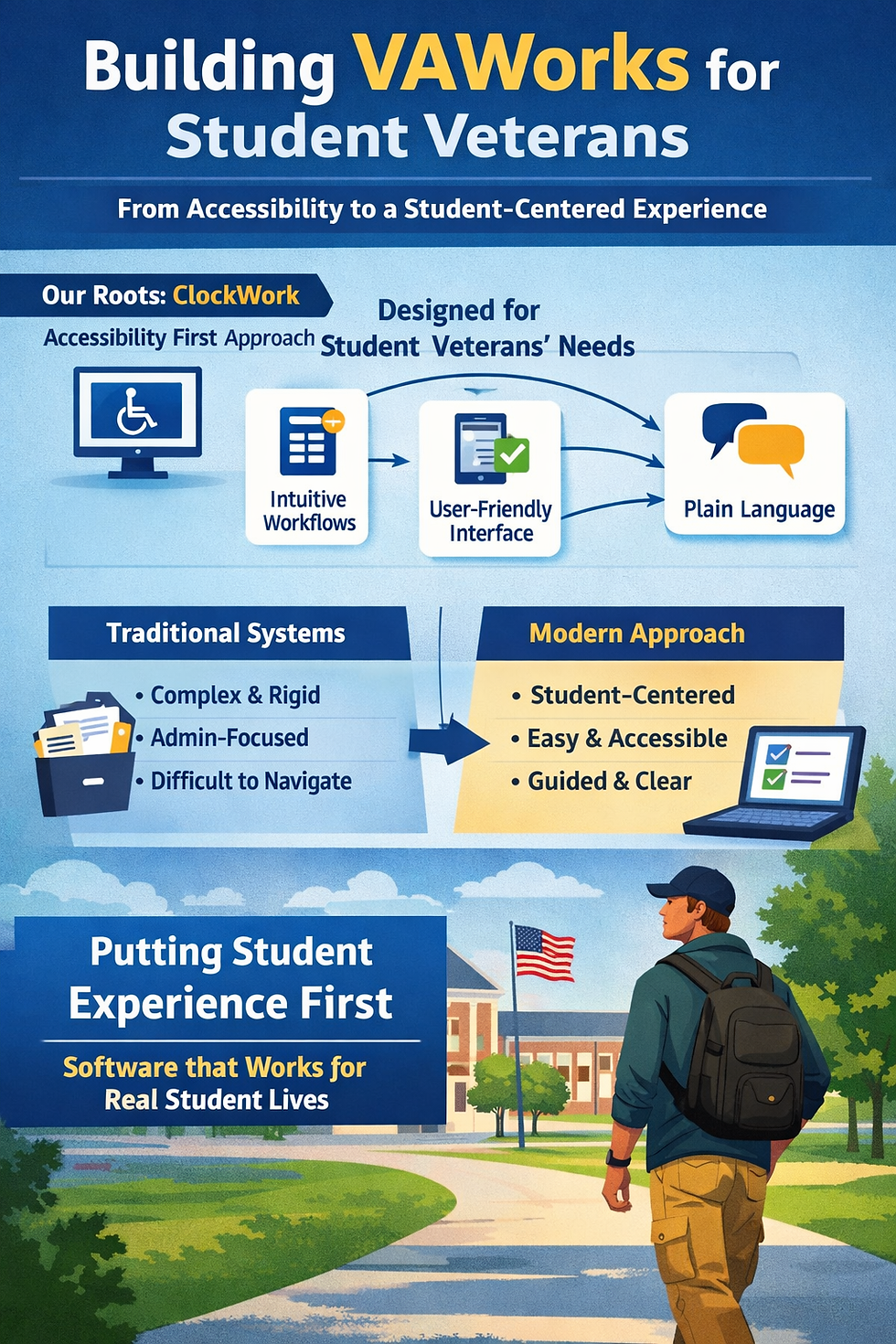
When Veterans Administrators evaluate software solutions, one question comes up again and again: “How does this improve the student veteran experience?”
It’s a fair and necessary question. In higher education, software is no longer just a system of record. It is part of how students interact with their institution, access support, and stay on track. For student veterans, who often navigate complex benefits, compliance requirements, and life transitions, the usability of software can make a meaningful difference.
Our Foundation: Accessibility First with ClockWork
Our journey toward student-centered software began with ClockWork, a platform purpose-built for accessibility services. From the beginning, ClockWork was designed to support students with diverse needs while simplifying workflows for staff.
That experience shaped our philosophy: When software is built with accessibility and student experience at its core, it becomes more intuitive, efficient, and effective for everyone.
Accessibility is not just about compliance, it’s about clarity, ease of use, and removing unnecessary barriers. These principles became the foundation for how we approached building VAWorks.
Building VAWorks Around Student Veterans’ Needs
VAWorks was designed specifically to support student veterans and the administrators who serve them. Rather than adapting a general system to fit veteran services, we started by understanding the real challenges student veterans face when using campus technology.
Student veterans often manage:
Multiple benefit requirements and documentation timelines
Academic responsibilities alongside work and family commitments
Interactions with both campus offices and external agencies
Software should simplify this experience,not add to the complexity.
With VAWorks, we focused on:
Intuitive workflows that guide users step by step
User-friendly interfaces that reduce confusion and errors
Accessibility built in from day one, not added later
Clear, plain language instead of institutional or technical jargon
The goal was simple: make it easier for student veterans to understand what they need to do, what’s been completed, and what comes next.
The Modern Approach vs. Traditional Systems
This is often the key distinction Veterans Administrators ask about.
Traditional systems were typically built with an administrative-first mindset. They focus on internal processes, data collection, and compliance, often requiring students to adapt to rigid workflows and complex interfaces.
The modern approach, which VAWorks follows, is student-centered:
Design starts with the student experience, not just backend needs
Interfaces are intuitive and accessible across devices
Systems anticipate user questions and reduce cognitive load
Technology supports both students and staff without duplicating effort
By prioritizing usability and accessibility, VAWorks helps reduce frustration, improve accuracy, and strengthen communication between student veterans and campus administrators.
Why Student Experience Matters
When software reflects an understanding of student needs, everyone benefits. Student veterans gain confidence and clarity. Administrators spend less time troubleshooting systems and more time supporting students. Institutions improve outcomes while maintaining compliance.
From ClockWork to VAWorks, our mission has remained consistent: build software that supports real people, real workflows, and real student experiences.
That’s the modern approachand it’s why student experience continues to be at the center of everything we build. Written by Mary Baddam - Operations and Business Dev lead


Comments